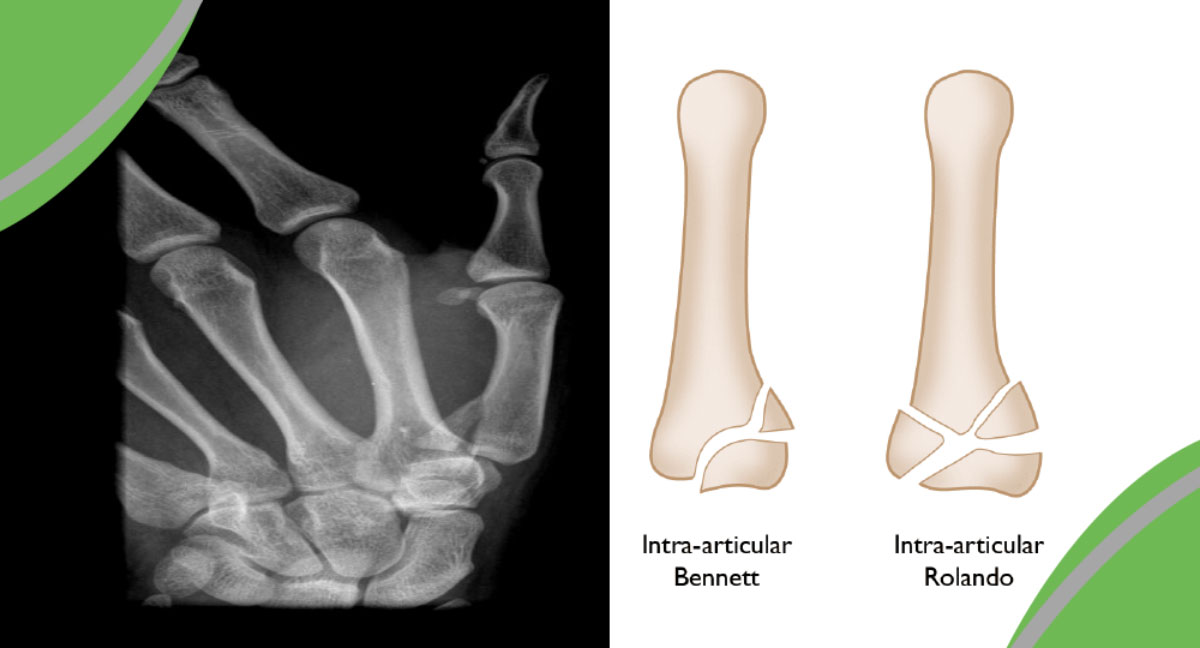
A Bennett fracture is a fracture at the base of thumb, more specifically at the base of the first metacarpal.
It is a fracture of two parts that extends into the joint, known as an intra-articular injury.
This fracture is normally caused by direct trauma to thumb or when the thumb is forced into an outwards position, such as with a fall.
The majority of thumb metacarpal fractures occur at the base, with the most common being a Bennett fracture.
A similar, but more complex base of thumb fracture is known as a Rolando fracture. This is where the fracture has 3 or more parts, known as a comminuted injury.
How are Bennett fractures managed?
If the fracture is considered stable and non-displaced, you will be managed in a cast or splint for 4-6 weeks.
If the fracture is considered unstable or displaced, it will need operative management to ensure the fracture is fixed correctly.
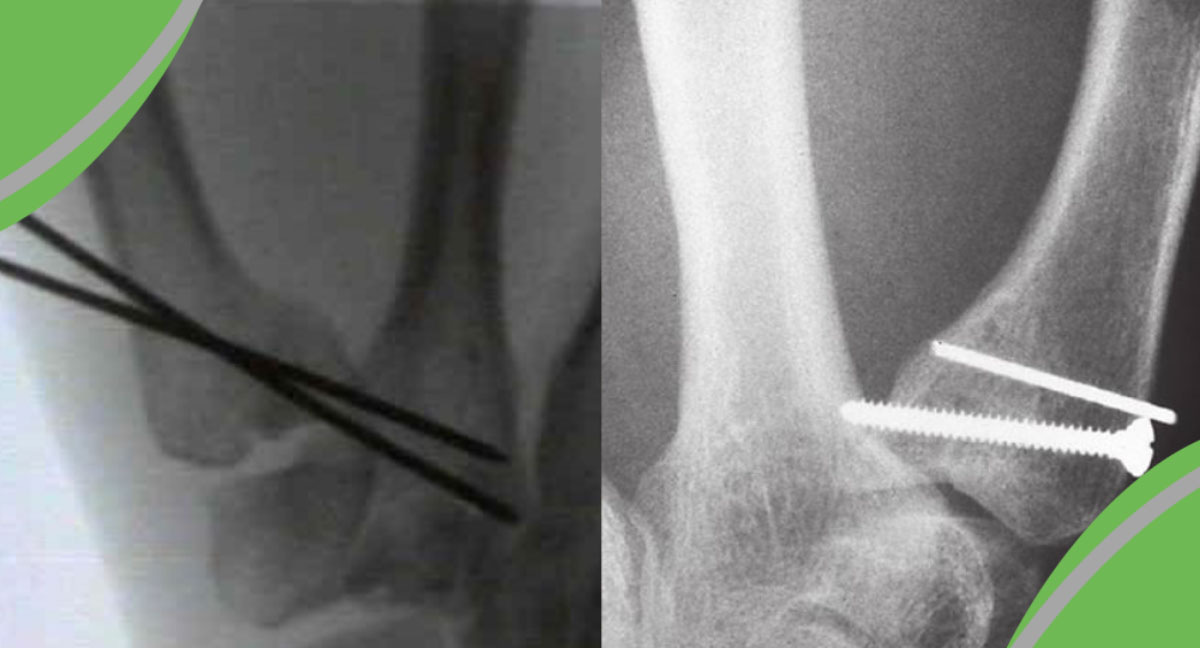
The most common type of fixation is with the use of K-wires, which are removed at 4-6 weeks post-operatively once the fracture is healed. Alternatively, your surgeon may prefer to opt for other methods of fixation, such as the use of surgical screws.
Early and appropriate management of a Bennett fracture is key to ensure an optimal outcome. If not managed correctly, complications include chronic pain in the thumb, non-union (fractures that do not heal) or early onset of post-traumatic osteoarthritis.
The role of hand therapy following a Bennett fracture
Hand therapists are experienced in identifying how fractures are initially best managed. They will help facilitate quick and appropriate liaison with hand surgeons to ensure a Bennett fracture is managed in the correct way based on the results of any scans.
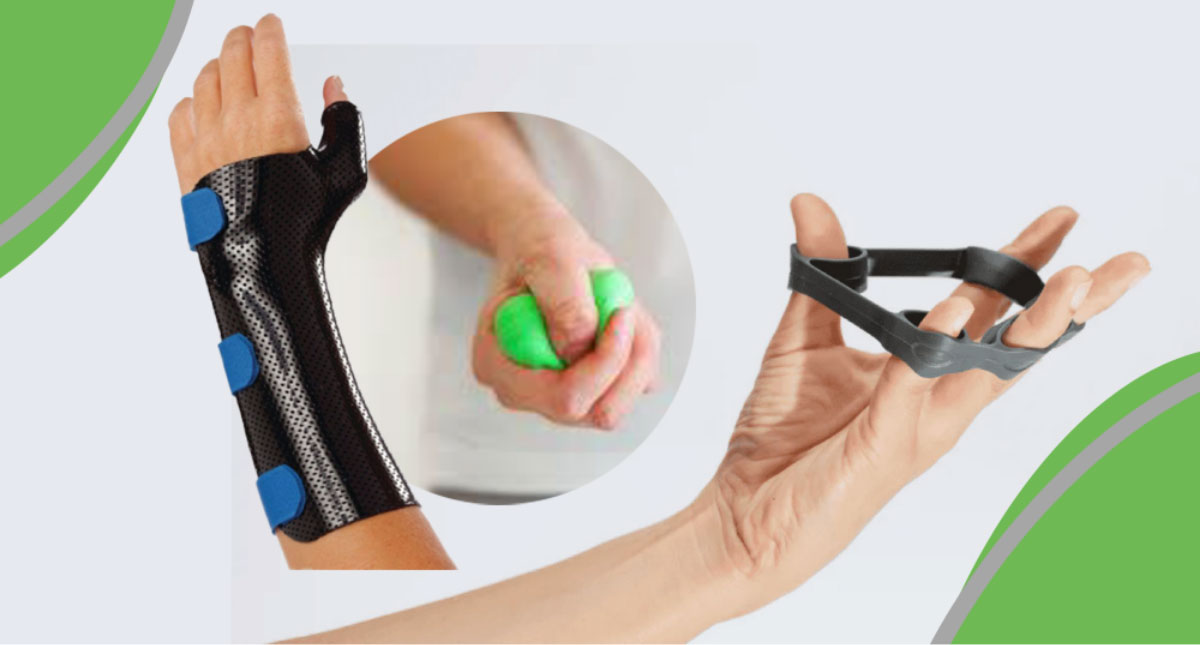
Custom fabrication of casts or thermoplastic splints to help protect the fracture whilst it is healing.
If operative management is required, custom thermoplastic splints are also used to protect the K-wires in the initial post-operative phase.
Once the fracture has healed, the thumb will be stiff and weak following immobilisation. Hand therapists will help guide people through the rehabilitation process to ensure their thumb range of motion, strength and function returns to the level they require for their work and sporting needs.
Clinical Article
AHTA Closed Trauma Course 2026: Driving Advanced Clinical Reasoning in Hand Therapy
by Sharon Goldby
The Australian hand therapy association presented the closed trauma course over three days in May 2026 for qualified Occupational therapists and Physiotherapists who have acquired an advanced knowledge of hand therapy and are looking to become Accredited hand therapists.
The course had over 40 participants and was facilitated by Christina Harwood education manager with the AHTA and Occupational Therapist. Additional clinical specialists in advanced shoulder and wrist pathology also assisted with presenting this course.
Melbourne hand therapy, Occupational Therapist, Sharon Goldby assisted with the clinical reasoning aspects of the course with group participants. Participants are required to demonstrate competency in clinical reasoning, condition assessment and treatment plan development at an advanced level. Therapists at Melbourne hand therapy have met the clinical scope of practice criteria to be able to treat competently complex hand, wrist, elbow and shoulder pathology set by AHPRA with many Melbourne hand therapy therapists having completed and attained the level of accreditation required by the AHTA to practice at this level.
Content involved upper limb fractures, ligament and wrist injuries , neurovascular conditions, tendon injuries and tendinopathies and complex shoulder and elbow pathologies
Recently, the MHT team attended an informative professional development evening presented by the team at Maurice Blackburn Lawyers, focusing on medico-legal report writing, documentation and supporting WorkCover and TAC patients.
The session provided valuable insight into the importance of clear clinical documentation, responding to legal and insurer requests, and preparing reports that effectively support patient care and recovery outcomes. It was a fantastic opportunity for our therapists to further strengthen their understanding of the medico-legal side of hand therapy and the broader patient journey following injury.
A big thank you to the Maurice Blackburn team and Julie Cancio for sharing their expertise and practical knowledge with our clinicians and admin team.
For patients requiring support or advice regarding WorkCover or TAC matters, Maurice Blackburn have offices across Victoria, including Ringwood, and offer experienced assistance in injury and compensation claims.
Have you experienced exceptional care or teamwork from someone at MHT? We’d love to hear about it.
Help us celebrate those who go above and beyond.
Nomination Form
Thank you for your continued trust in Melbourne Hand Therapy. We’re committed to delivering collaborative, evidence-based care for every patient, every season.
Let’s continue working together to restore function and confidence, one hand at a time!